Every work has an architecture, and the architecture is already an answer.Toda obra tem uma arquitetura, e a arquitetura já é uma resposta.
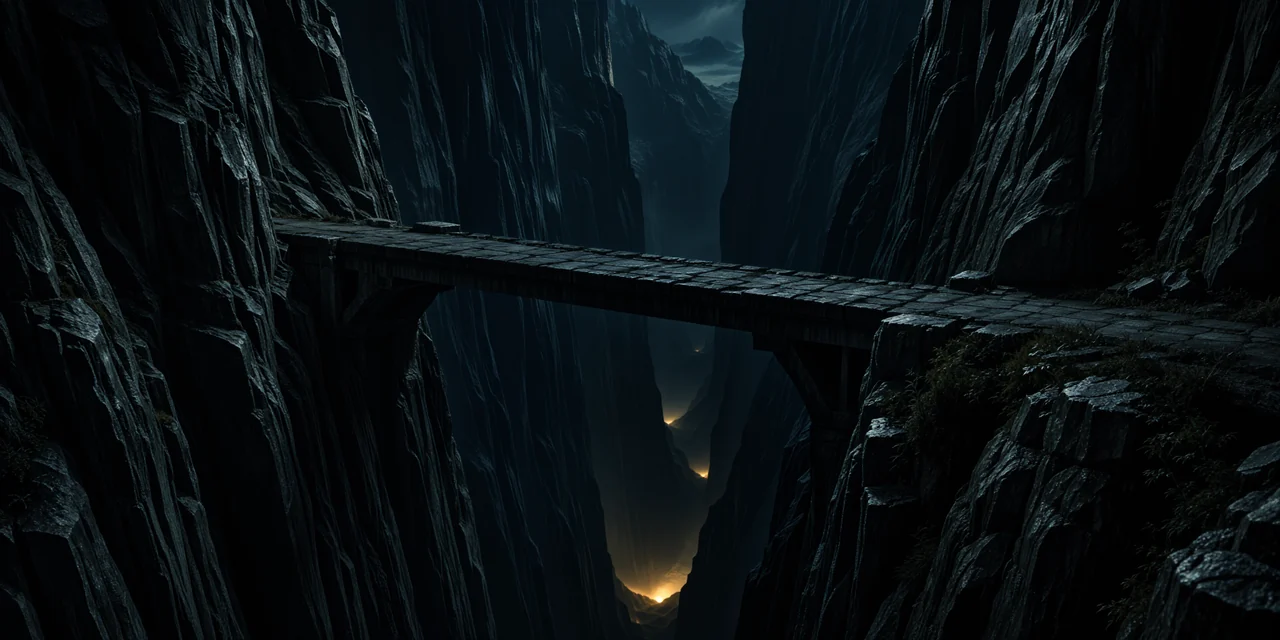
King built a tower. Something you climb, floor by floor, with a spiral staircase inside and a room on every landing holding a piece of the climber's life. The tower has only one direction, and the top is its most important place. That's where the door with the name is. And the top sends you back to the beginning.O King construiu uma torre. Uma coisa que se sobe, andar por andar, com uma escada em caracol por dentro e uma sala em cada patamar guardando um pedaço da vida de quem sobe. A torre tem uma direção só, e o topo é o lugar mais importante dela. É lá que está a porta com o nome. E o topo devolve ao começo.
Endless Chase was designed as something else. The design document uses an image I wrote long before I thought of this essay, and which now seems made for it: the game is an onion of meaning, and each player stops at the layer they manage to peel.O Endless Chase foi desenhado como outra coisa. O documento de design usa uma imagem que eu escrevi muito antes de pensar neste ensaio, e que agora parece ter sido feita pra ele: o jogo é uma cebola de sentido, e cada jogador para na camada que conseguir descascar.
On the surface, it's active nihilism, in Nietzsche's sense: the Self faces the thousand and one cycles, the meaningless repetition, the thousand deaths, and chooses anyway to create meaning in the void and overcome himself. One layer down, it's Jungian psychology: the Individuation, Bolek and Slawa as animus and anima, the person who reintegrates. Deeper still, it's Gnosticism: the Yorhnas as false creators, cast in the mold of the Gnostic demiurge, spinning the material world as a prison of cycles, the divine spark trapped in flesh, kairos as the awakening that sets free. And at the bottom of it all, embedded the way Tolkien embedded Christianity in his myths without ever preaching, lies a Calvinist reading of the Bible: the Son who descends into matter, dies and rises, the grace that pierces predestination, the chain of sacrifice and a eucatastrophe at the end.Na superfície, é niilismo ativo, no sentido do Nietzsche: o Self encara os mil e um ciclos, a repetição sem sentido, as mil mortes, e mesmo assim escolhe criar sentido no vazio e se superar. Uma camada abaixo, é psicologia junguiana: a Individuação, o Bolek e a Slawa como animus e anima, a pessoa que se reintegra. Mais fundo, é gnosticismo: os Yorhnas como falsos criadores, no molde do demiurgo gnóstico, girando o mundo material como uma prisão de ciclos, a fagulha divina presa na carne, o kairós como o despertar que liberta. E no fundo de tudo, embutida do jeito que o Tolkien embutiu o cristianismo nos mitos dele sem nunca pregar, está uma releitura bíblica calvinista: o Filho que desce à matéria, morre e ressuscita, a graça que fura a predestinação, o sacrifício em cadeia e uma eucatástrofe no fim.
Notice the direction. A tower is climbed. An onion is peeled, from the outside in, layer by layer, down to the center. Nobody climbs an onion. The movement the game asks of the player is the same one this essay has asked of Roland since the opening: cross through, go to the bottom. The order of the layers is the order of the essay. Nietzsche on the surface, providing the movement. The guarantee at the center, coming from outside him.Repara na direção. Uma torre se sobe. Uma cebola se descasca, de fora pra dentro, camada por camada, até o centro. Ninguém sobe numa cebola. O movimento que o jogo pede do jogador é o mesmo que este ensaio pediu do Roland desde a abertura: atravessar, ir pro fundo. E a ordem das camadas é a ordem do ensaio. O Nietzsche na superfície, dando o movimento. A garantia no centro, vinda de fora dele.
It's the Nietzschean movement with a theological guarantee, turned into architecture.É o movimento nietzschiano com garantia teológica, virando arquitetura.
The Gnostic layer has a consequence that speaks straight to King. In the Tower, the one turning the wheel is ka, a will without a face. In the game, whoever turns the prison of cycles has a face, and lies. The revelation that the Yorhnas are the true creators of the world turns the Self's head inside out halfway through the game: the enemy he was fighting was their pawn, and the mentor he feared wasn't the real antagonist. Kodai's specter, which follows the Self along the path of Chaos, tries to seduce him with the oldest offer in the world: come with me, become a god. It's the serpent of Genesis with another voice, promising “ye shall be as gods.”A camada gnóstica tem uma consequência que conversa direto com o King. Na Torre, quem gira a roda é o ka, uma vontade sem rosto. No jogo, quem gira a prisão dos ciclos tem rosto, e mente. A revelação de que os Yorhnas são os verdadeiros criadores do mundo vira a cabeça do Self do avesso no meio do jogo: o inimigo que ele combatia era peão deles, e o mentor que ele temia não era o verdadeiro antagonista. O espectro do Kodai, que acompanha o Self pela trilha do Caos, tenta seduzi-lo com a oferta mais velha do mundo: vem comigo, vira uma divindade. É a serpente do Gênesis com outra voz, prometendo que ele seria como Deus.
But the game doesn't stop at gnosis, and here it parts ways with almost everything the genre does with the idea. Knowing the gods lie saves no one. Gnosis discovers the prison, but it doesn't open the door. What saves, in Endless Chase, is surrender to the Father's love. The design document calls this the Christian layer eating the Gnostic one from underneath. It's exactly what I said, in chapter 4, had to happen to ka: it isn't enough to see the wheel. The wheel has to be broken, and whoever breaks it comes from outside it.Mas o jogo não para na gnose, e é aqui que ele se separa de quase tudo o que o gênero faz com essa ideia. Saber que os deuses mentem não salva ninguém. A gnose descobre a prisão, mas não abre a porta. O que salva, no Endless Chase, é a rendição ao amor do Pai. O documento de design chama isso de a camada cristã comendo a gnóstica por baixo. E é exatamente o que eu disse, no capítulo 4, que precisava acontecer com o ka: não basta enxergar a roda. A roda precisa ser quebrada, e quem quebra vem de fora dela.
Remember the line I planted in chapter 4, with Joseph coming out of the pit? It hurts from below. It saves from above. It's in the game's design document, and it describes Aeon. Aeon is the hardest character to read in Endless Chase, on purpose, because he's the Calvinist Father. His acts look like cruelty the whole game: he's the one who accelerated the cycles and condemned the Self to a thousand lives without memory, he's the one who pushed the Self toward sacrifice. In chronos, in the time below, it looks like betrayal. Only in kairos, seen from above, does it read as care. The document sums it up in one line: they hurt from below, they save from above.Lembra da frase que eu plantei no capítulo 4, com o José saindo do poço? Machuca de baixo, salva de cima. Ela está no documento de design do jogo, e descreve o Aeon. O Aeon é o personagem mais difícil de ler do Endless Chase, de propósito, porque ele é o Pai calvinista. Os atos dele parecem crueldade o jogo inteiro: foi ele quem acelerou os ciclos e condenou o Self a mil vidas sem memória, foi ele quem empurrou o Self pro sacrifício. No chronos, no tempo de baixo, isso parece traição. Só no kairós, visto de cima, se lê como cuidado. O documento resume em quatro palavras: machucam de baixo, salvam de cima.
It's the difference between ka and the decree, from chapter 4, staged. King's wheel has a will but no face. Aeon's decree has a face, a voice, guilt and, in the end, an embrace.É a diferença entre o ka e o decreto, do capítulo 4, encenada. A roda do King tem vontade, mas não tem rosto. O decreto do Aeon tem rosto, tem voz, tem culpa, e, no fim, tem abraço.
Aeon holds one more irony for the ship of Theseus. Aeon isn't a name. It's a title. The guardian of time passes from bearer to bearer across the ages, and the weight of the office is greater than any individual who carries it. It's Hobbes's ship dressed as a character: the name passes through the people, and it's the name that keeps the office standing.O Aeon guarda ainda uma ironia pro barco de Teseu. Aeon não é um nome. É um título. O guardião do tempo passa de portador em portador ao longo das eras, e o peso do cargo é maior que qualquer indivíduo que o carrega. É o barco do Hobbes vestido de personagem: o nome atravessa as pessoas, e é o nome que mantém o cargo de pé.
But severity doesn't work alone. The game has a counterforce, a grace that pierces Aeon's plan from before the game even begins. The free switch between Bolek and Slawa, which by Aeon's plan shouldn't even be available so early, is treated in the design as a glitch of grace: the player touches wholeness before deserving it. The document describes the two forces as the two hands of the same creation, one that squeezes and one that releases, and neither one alone reaches the right ending. It's grace again, the thing ka doesn't know.Só que a severidade não trabalha sozinha. O jogo tem uma contraforça, uma graça que fura o plano do Aeon desde antes do jogo começar. A troca livre entre o Bolek e a Slawa, que pelo plano do Aeon nem deveria estar disponível tão cedo, é tratada no design como um glitch de graça: o jogador toca a completude antes de merecer. O documento descreve as duas forças como as duas mãos da mesma criação, uma que aperta e uma que solta, e nenhuma das duas sozinha chega ao final certo. É a graça outra vez, aquilo que o ka não conhece.
The rule from chapter 12, that there's no way to rise without having gone down, is built into the game in a way that doesn't depend on any interpretation. It's in the code.E a regra do capítulo 12, não tem como subir sem ter descido, está no jogo de um jeito que não depende de interpretação nenhuma. Está no código.
The part of the game in which the Self tries to reach Heaven splits into two paths, one of Order and one of Chaos. The mission for the road to Heaven only opens once the player finishes the entire path of Chaos. Inside it, in one of the last missions, the Self is pulled into a portal that leads to the plane below, the basement of the creation the Yorhnas forged, and goes in against his own will. Down there, in a citadel made of pure Chaos, Chaos speaks to him: I will always exist, there's no multiverse without me. And the Self understands that the rebuilt world won't be Order alone or Chaos alone. It will need both. The whole world is an individuation. Only then does he find the crack that leads out of the plane below, a fissure in the rock, like Dante's at the bottom of Hell. And only after that does the road to Heaven open.A parte do jogo em que o Self tenta chegar ao Céu se divide em duas trilhas, uma da Ordem e uma do Caos. E a missão do caminho pro Céu só abre depois que o jogador termina a trilha do Caos inteira. Dentro dela, numa das últimas missões, o Self é puxado pra um portal que leva ao plano de baixo, o porão da criação falsificada pelos Yorhnas, e entra lá contra a própria vontade. Lá embaixo, numa cidadela feita de puro Caos, o Caos fala com ele: eu sempre vou existir, não dá pra ter um multiverso sem mim. E o Self entende que o mundo reconstruído não vai ser só Ordem nem só Caos. Vai precisar dos dois. O mundo inteiro é uma individuação. Só então ele encontra a fenda de saída do plano de baixo, uma fresta na rocha, como a do Dante no fundo do Inferno. E só depois disso o caminho pro Céu se abre.
The player can't rise without having gone down. Not because of a moral choice he makes or fails to make. Because the upper door stays locked until he goes through the lower one.O jogador não consegue subir sem ter descido. Não por uma escolha moral que ele faz ou deixa de fazer. Porque a porta de cima está trancada até ele passar pela de baixo.
And nobody rises alone. The Self's road to Heaven is paved with a chain of sacrifices. The first is that of Kendrick, the Pilgrim, who wrote in his diary that he needed the courage to destroy his own immortality and pass it on to the Chosen One. He summed up the pact in one sentence: the Chosen One will trust me, and I will trust him. The second is Aeon's. In the battle that closes the game's second part, when Kodai is about to kill the Self, Aeon steps in front, takes the blow, and before his body comes undone pushes the Self through a portal, away from death. The third is that of Noah, Kendrick's son, Grand Master of the order that waited its whole life for the Chosen One. He walks with the Self through the entire third part of the game as a faithful counselor, without the Self knowing that this man will be the last sacrifice before Heaven. In the end, Noah offers himself as the final passage, and pays the highest price in the game. He isn't a villain. He's a martyr.E ninguém sobe sozinho. O caminho do Self até o Céu é pavimentado por uma cadeia de sacrifícios. O primeiro é o do Kendrick, o Peregrino, que deixou escrito no diário que precisava ter a coragem de destruir a própria imortalidade pra passá-la ao Escolhido, e resumiu o pacto numa frase: o Escolhido vai confiar em mim, e eu vou confiar nele. O segundo é o do Aeon. Na batalha que fecha a segunda parte do jogo, quando o Kodai está prestes a matar o Self, o Aeon se põe na frente, recebe o golpe, e antes de o corpo dele se desfazer empurra o Self por um portal, pra longe da morte. O terceiro é o do Noah, filho do Kendrick, Grão-Mestre da ordem que esperou o Escolhido a vida inteira. Ele acompanha o Self por toda a terceira parte do jogo como conselheiro fiel, sem que o Self saiba que aquele homem vai ser o último sacrifício antes do Céu. No fim, o Noah se oferece como a passagem final, e paga o preço mais alto do jogo. Não é vilão. É mártir.
It's chapter 12's Callahan multiplied by three. In the Tower, whoever goes down out of love saves someone, and Roland keeps climbing alone, without looking back. In the game, each one who goes down pushes the Self one step closer to Heaven, and the Self rises carrying all of them.É o Callahan do capítulo 12 multiplicado por três. Na Torre, quem desce por amor salva alguém, e o Roland segue subindo sozinho, sem olhar pra trás. No jogo, cada um que desce empurra o Self um degrau pra perto do Céu, e o Self sobe carregando todos eles.
And the rise isn't a climb either. After the last great fight before Heaven, the Self doesn't climb a staircase. He is pulled up by a divine force. Roland climbs the Tower on his own legs, step by step, and is sent back to the desert. The Self is carried. It's the difference between a faith that climbs by its own effort and a grace that pulls.E a subida também não é escalada. Depois da última grande luta antes do Céu, o Self não sobe uma escada. É puxado por uma força divina. O Roland sobe a Torre com as próprias pernas, degrau por degrau, e é devolvido ao deserto. O Self é levado. É a diferença entre a fé que sobe pelo próprio esforço e a graça que puxa.
In Heaven, the Self enters kairos and sees what couldn't be seen from below. Aeon, whose body had come undone, runs to receive him in his true form, without armor, and his hardness dissolves into an embrace. The design document calls that moment, in so many words, a eucatastrophe, Tolkien's word, which appeared in chapter 11 when I said Susannah's happy ending had the form of a eucatastrophe and the content of its opposite. Here it's the opposite of the opposite. The joy of Heaven erases nothing that came before: it's only possible because the Self went through all of it, including the loss of those who died so he could get there. The document describes the Self who reaches Heaven as someone who has crossed the void, his own psyche and the lie of the false gods, and who finally surrenders to grace. The layers of the onion, one after another, down to the center.No Céu, o Self entra no kairós e enxerga o que não dava pra ver de baixo. O Aeon, que tinha se desfeito no corpo, corre pra recebê-lo na forma verdadeira, sem armadura, e a dureza dele se dissolve num abraço. O documento de design chama esse momento, com todas as letras, de eucatástrofe, a palavra do Tolkien que apareceu no capítulo 11, quando eu disse que o final feliz da Susannah tinha a forma de uma eucatástrofe e o conteúdo do contrário. Aqui é o contrário do contrário. A alegria do Céu não apaga nada do que aconteceu antes: ela só é possível porque o Self atravessou tudo, inclusive a perda de quem morreu pra ele chegar ali. O documento descreve o Self que chega ao Céu como alguém que atravessou o vazio, a própria psique e a mentira dos falsos deuses, e que enfim se rende à graça. As camadas da cebola, uma depois da outra, até o centro.
Heaven doesn't close the story either. That's where Margareth reappears, beside Aeon, and where the Self discovers her essence is threatened on two fronts: the Yorhnas want to overwrite it in the next cycle, and Kodai is advancing on the material plane. Aeon sends the Self back to the world below, because the duty isn't done. Even at the top, the game's direction is going back down to take care of someone.O Céu também não encerra a história. É ali que a Margareth reaparece, ao lado do Aeon, e que o Self descobre que a essência dela está ameaçada em duas frentes: os Yorhnas querem sobrescrevê-la no próximo ciclo, e o Kodai avança no plano material. O Aeon devolve o Self ao mundo de baixo, porque o dever ainda não terminou. Até no topo, a direção do jogo é voltar pra baixo e cuidar de alguém.
What's left is to compare the centers.Falta comparar os centros.
Every great quest story has a place everyone wants to reach. In King's saga, it's the Tower. In Endless Chase, it's the Forge of Creation, which appeared in the previous chapter as Kodai's hunt. Seen from afar, it looks like the same piece under another name: the point at the center of everything, coveted by all, unreachable for almost all. Seen up close, they're opposites, and the difference between them sums up this essay.Toda grande história de busca tem um lugar que todo mundo quer alcançar. Na saga do King, é a Torre. No Endless Chase, é o Forge of Creation, a forja que apareceu no capítulo anterior como a caça do Kodai. Visto de longe, parece a mesma peça com outro nome: o ponto no centro de tudo, cobiçado por todos, inalcançável pra quase todos. Visto de perto, são coisas opostas, e a diferença entre elas resume este ensaio.
The Tower sustains. It's the axis that holds up every world, the point where the Beams cross, and, if it falls, everything falls. Its function is to preserve. The Forge remakes. A forge keeps nothing: it takes what is broken, puts it in the fire and gives it back in another shape. The Tower is a pillar. The Forge is a furnace.A Torre sustenta. É o eixo que segura todos os mundos, o ponto onde os Feixes se cruzam, e, se ela cai, cai tudo. A função dela é conservar. O Forge refaz. Uma forja não guarda nada: pega o que está quebrado, põe no fogo e devolve com outra forma. A Torre é um pilar. O Forge é uma fornalha.
Put both into the image of the ship. On the inside, the Tower is a museum of the old ship. Every landing holds a piece of Roland's life, intact, on display, for him to see again as he climbs. The Forge is the shipyard, the place where the ship is remade. In the Tower, the old planks sit in a glass case. In the Forge, they go into the fire.Põe as duas na imagem do barco. Por dentro, a Torre é um museu do navio antigo. Cada patamar guarda um pedaço da vida do Roland, intacto, exposto, pra ele rever enquanto sobe. O Forge é o estaleiro, o lugar onde o navio é refeito. Na Torre, as tábuas velhas ficam na vitrine. No Forge, elas vão pro fogo.
The Bible has both images, and not by accident on opposite sides. The first famous tower in Scripture is Babel. The builders wanted to raise a tower whose top would reach heaven and, in the words of the text, “let us make us a name.” Roland climbs the whole Tower and finds exactly that at the top: his own name, written on a door. And what comes after, at Babel, is dispersion. God scatters the builders over the earth. Roland is scattered back into the desert.A Bíblia tem as duas imagens, e não por acaso em lados opostos. A primeira torre famosa das Escrituras é Babel. Os construtores queriam erguer uma torre cujo topo tocasse o céu e, nas palavras do texto, fazer um nome pra si mesmos. O Roland sobe a Torre inteira e encontra no topo exatamente isso: o próprio nome, escrito numa porta. E o que vem depois, em Babel, é a dispersão. Deus espalha os construtores pela terra. O Roland é espalhado de volta ao deserto.
The other image is the potter. In chapter 4, I left out the potter of Romans 9, the one about election. This is another one, older, Jeremiah's, and he doesn't speak about who is chosen, he speaks about what happens to the vessel that gets marred. God tells the prophet, “go down to the potter's house,” and the verb really is go down. There, the prophet sees a vessel marred in the potter's hand. The potter doesn't throw the clay away, nor take other clay to make a copy. He makes it again, from the same clay, into another vessel, as seemed good to him. And God tells the people that, as the clay is in the potter's hand, so are they in his. Malachi has the metal version: the Lord comes like a refiner's fire, and what passes through that fire comes out purified, not destroyed. That's the logic of the forge. What guarantees it's the same vessel isn't the shape it had. It's the hand that never let go of it.A outra imagem é a do oleiro. No capítulo 4, eu deixei de fora o oleiro do Romanos 9, o que fala de eleição. Este é outro, mais antigo, o de Jeremias, e ele não fala de quem é escolhido, fala do que acontece com o vaso que se estraga. Deus manda o profeta descer à casa do oleiro, e o verbo é esse mesmo, descer. Lá, o profeta vê um vaso se estragar na mão do oleiro. O oleiro não joga o barro fora, nem pega outro barro pra fazer uma cópia. Refaz o vaso, do mesmo barro, com outra forma, como lhe pareceu bem. E Deus diz ao povo que eles são, na mão dele, como o barro na mão do oleiro. O Malaquias tem a versão em metal: o Senhor vem como o fogo de quem refina a prata, e o que passa por esse fogo sai purificado, não destruído. É a lógica da forja. O que garante que é o mesmo vaso não é o formato que ele tinha. É a mão que nunca o soltou.
It's chapter 8's measuring rod in another material. What crosses the door is the person, held up by the one who calls them. What crosses the fire is the clay, held up by the one who shapes it.É a régua do capítulo 8 em outra matéria. O que atravessa a porta é a pessoa sustentada por quem a chama. O que atravessa o fogo é o barro sustentado por quem o molda.
The way of getting there is opposite too. The Tower is reached by force and obstinacy. The only requirement for reaching the top is never letting go of the Tower, and that's why Roland arrives with it and nothing else, after letting Jake fall along the way. The Forge isn't reached like that, and the game goes out of its way to show what happens to anyone who tries. In the previous chapter, I said Kodai looks more like Roland than the Self does. Here the resemblance is complete, because Kodai is the Roland of the Forge: he hunts the place for millennia, sacrifices whoever stands in his way and tries to force the entrance by manufacturing, from the outside in, the energy that would open the door. He never manages. In one of the game's branches, the Self takes his side, and the two drain souls to recreate the multiverse by force. When they throw the souls into the Forge, it explodes and kills everyone. In another, the two spend a thousand cycles trying to rebuild the world together and fail. The Tower punishes force with repetition. The Forge simply doesn't respond to it.O modo de chegar também é oposto. A Torre se alcança por força e por obstinação. O único requisito pra chegar ao topo é nunca largar a Torre, e por isso o Roland chega com ela e sem mais nada, depois de ter deixado o Jake cair no caminho. O Forge não se alcança assim, e o jogo faz questão de mostrar o que acontece com quem tenta. No capítulo anterior, eu disse que o Kodai se parece mais com o Roland do que o próprio Self. Aqui a semelhança fica completa, porque o Kodai é o Roland do Forge: caça o lugar por milênios, sacrifica quem estiver no caminho e tenta forçar a entrada fabricando de fora pra dentro a energia que abriria a porta. Nunca consegue. Numa das ramificações do jogo, o Self fica do lado dele, e os dois sugam almas pra recriar o multiverso à força. Quando jogam as almas no Forge, ele explode e mata todo mundo. Em outra, os dois passam mil ciclos tentando reconstruir o mundo juntos e fracassam. A Torre pune a força com a repetição. O Forge simplesmente não responde a ela.
What opens the Forge is neutral energy, Order and Chaos united in a single being. In other words, the Individuation. The Forge isn't conquered. Only those who are whole reach it.O que abre o Forge é a energia neutra, a Ordem e o Caos unidos num ser só. Ou seja, a Individuação. O Forge não se conquista. Só chega nele quem está inteiro.
The last parallel is my favorite. Both centers send whoever arrives back to the beginning. At the top of the Tower, Roland is pushed back into the desert, alone and without memory, to repeat everything. On the game's complete route, the Self also goes back to the beginning: he reaches the Forge and restarts all the cycles, becoming the new beginning of the line. The shape is the same, a circle. Everything else changes. Roland is returned. The Self chooses to return. Roland goes back split, bound to the one plank he never swaps. The Self goes back whole. Roland goes back deaf. The Self goes back hearing.O último paralelo é o meu preferido. Os dois centros devolvem quem chega ao começo. No topo da Torre, o Roland é empurrado de volta ao deserto, sozinho e sem memória, pra repetir tudo. Na rota completa do jogo, o Self também volta ao começo: chega ao Forge e reinicia todos os ciclos, virando o novo começo da linhagem. A forma é a mesma, um círculo. O que muda é todo o resto. O Roland é devolvido. O Self escolhe voltar. O Roland volta partido, preso à única tábua que nunca troca. O Self volta inteiro. O Roland volta surdo. O Self volta ouvindo.
It's the question of Nietzsche's demon, from chapter 1, finally answered. Would you accept living all of this again, innumerable times? Roland never even hears the question, because the system erases his memory first. The Self hears it, and says yes. But it isn't the solitary yes of Nietzsche's hero, creating meaning alone in the void. It's the yes of someone who sees the whole cycle from a full time and knows whose hand holds it. The movement is Nietzsche's. The guarantee comes from outside him.É a pergunta do demônio do Nietzsche, do capítulo 1, finalmente respondida. Você aceitaria viver tudo isso de novo, inúmeras vezes? O Roland nunca chega a ouvir a pergunta, porque o sistema apaga a memória antes. O Self ouve, e diz sim. Mas não é o sim solitário do herói do Nietzsche, criando sentido sozinho no vazio. É o sim de quem enxerga o ciclo inteiro de um tempo pleno e sabe que mão o segura. O movimento é do Nietzsche. A garantia vem de fora dele.
The circle was never the problem. The problem was going back to it without the question, and alone.O círculo nunca foi o problema. O problema era voltar a ele sem a pergunta, e sozinho.
The game's map of endings works as a commentary on the Tower. Honesty matters here, because the game doesn't hand the way out to everyone for free. It has routes where the Self fails, and each one seems designed to talk to King's saga.O mapa de finais do jogo funciona como um comentário à Torre. E é aqui que a honestidade importa, porque o jogo não dá a saída de graça pra todo mundo. Ele tem rotas em que o Self falha, e cada uma delas parece desenhada pra conversar com a saga do King.
In one of them, called Incomplete Heritage, the Self also goes back to the beginning and restarts the cycles, only alone, without having integrated. He spends the following cycles wandering from world to world after Margareth, unable to hear her. The design document describes this Self in four words: restarted alone, and deaf. It's Roland inside my game. The man who starts over without knowing what he lost.Numa delas, chamada Heritage Incompleto, o Self também volta ao começo e reinicia os ciclos, só que sozinho, sem ter se integrado. Passa os ciclos seguintes vagando de mundo em mundo atrás da Margareth, sem conseguir ouvi-la. O documento de design descreve esse Self em quatro palavras: reiniciou sozinho, e surdo. É o Roland dentro do meu jogo. O homem que recomeça sem saber o que perdeu.
In another, the one that opens the next game in the saga, The Memory of Blood, the Self tries to go back to the beginning of cycle 1001 to redo history and recover what he lost. But the timeline is no longer the same, and he arrives in a decayed world. And there, trying to recover the original, he becomes his own shadow. Kairos is born, the villain of the saga: the Self himself, fallen, the Bolek and Slawa who never integrated. It's the mistake of wanting to go back to the old version of yourself instead of crossing to the new one. Susannah tried to keep a copy of what she lost. The Self of The Memory of Blood tries to go back to the original of what he lost. Both fail for the same reason: neither accepts passing through the bottom.Em outra, a que abre o jogo seguinte da saga, The Memory of Blood, o Self tenta voltar ao começo do ciclo 1001 pra refazer a história e recuperar o que perdeu. Mas a linha do tempo já não é a mesma, e ele chega a um mundo decaído. E ali, tentando recuperar o original, ele vira a própria sombra. Nasce o Kairós, o vilão da saga, que é o próprio Self caído, o Bolek e a Slawa que não se integraram. É o erro de querer voltar à versão antiga de si mesmo em vez de atravessar até a nova. A Susannah tentou ficar com uma cópia do que perdeu. O Self do Memory of Blood tenta voltar ao original do que perdeu. Os dois erram pelo mesmo motivo: nenhum dos dois aceita passar pelo fundo.
There's also a radical mercy, healing your own enemy instead of killing him, which only those who have integrated can manage. And there's the complete route, the one that only opens for those who individuate. It's the only ending in which Margareth is heard in full, and in which all the strange sentences she dropped along the way, the ones that sounded like daydreams, come due all at once.Existe ainda uma misericórdia radical, curar o próprio inimigo em vez de matá-lo, que só quem se integrou consegue. E existe a rota completa, a que só se abre pra quem se individua. É o único final em que a Margareth é ouvida por inteiro, e em que todas as frases estranhas que ela soltou pelo caminho, as que pareciam devaneio, cobram o sentido de uma vez.
In the game that closes the saga, Heritage for the Future, the routes meet again, and Hobbes's ship appears in full. On one side, the Self who integrated. On the other, Kairos, the Self who fell. The same being, at the two ends of the multiverse, face to face. Two ships built from the same wood, moored in the same harbor, both swearing they're the original. Kairos, when he appears, takes on the sex of whichever form the player is using at that moment: if you play as Bolek, he's a man; if you play as Slawa, she's a woman. The villain is your own reflection. The ship of Theseus, in the end, isn't a question about wood. It's a question about which of the two you're going to be.E, no jogo que fecha a saga, o Heritage for the Future, as rotas se reencontram, e o barco do Hobbes aparece de corpo inteiro. De um lado, o Self que se integrou. Do outro, o Kairós, o Self que caiu. O mesmo ser, nas duas pontas do multiverso, frente a frente. Dois navios feitos da mesma madeira, atracados no mesmo porto, e os dois jurando que são o original. E o Kairós, quando aparece, assume o sexo da forma em que o jogador está naquele momento: se você joga com o Bolek, ele é homem; se joga com a Slawa, ele é mulher. O vilão é o seu próprio reflexo. O barco de Teseu, no fim, não é uma pergunta sobre madeira. É uma pergunta sobre qual dos dois você vai ser.
And yes, someone will call this chapter an ad for my game. It was written the way it was with that in mind. It sells nothing. It compares architectures of answers. And it shows the routes where the Self fails with the same care it shows the one that works, because a game that only had the good way out would just be a tower painted a different color.E sim, alguém vai chamar este capítulo de propaganda do meu jogo. Foi pensando nisso que ele foi escrito do jeito que foi. Ele não vende nada. Compara arquiteturas de resposta. E mostra as rotas em que o Self fracassa com o mesmo cuidado com que mostra a que dá certo, porque um jogo que só tivesse a saída boa seria só uma torre pintada de outra cor.
At the bottom of the onion, where the last layer ends, the design document records the sentence the game whispers without shouting, without a single sermon on screen: accept Christ, player. As the truth that remains when nihilism, psychology and gnosis have been peeled away and weren't enough. And with the most Calvinist caveat possible: even that acceptance is grace. The player who gets there was drawn the whole time, like the Self.E no fundo da cebola, onde termina a última camada, o documento de design registra a frase que o jogo sussurra sem gritar, sem sermão nenhum na tela: aceite a Cristo, jogador. Como verdade que sobra quando o niilismo, a psicologia e a gnose já foram descascados e não bastaram. E com a ressalva mais calvinista possível: até esse aceite é graça. O jogador que chega ali foi atraído o tempo todo, como o Self.
King built a tower, and a tower is climbed. I built an onion, and an onion is peeled.O King construiu uma torre, e uma torre se sobe. Eu construí uma cebola, e uma cebola se descasca.