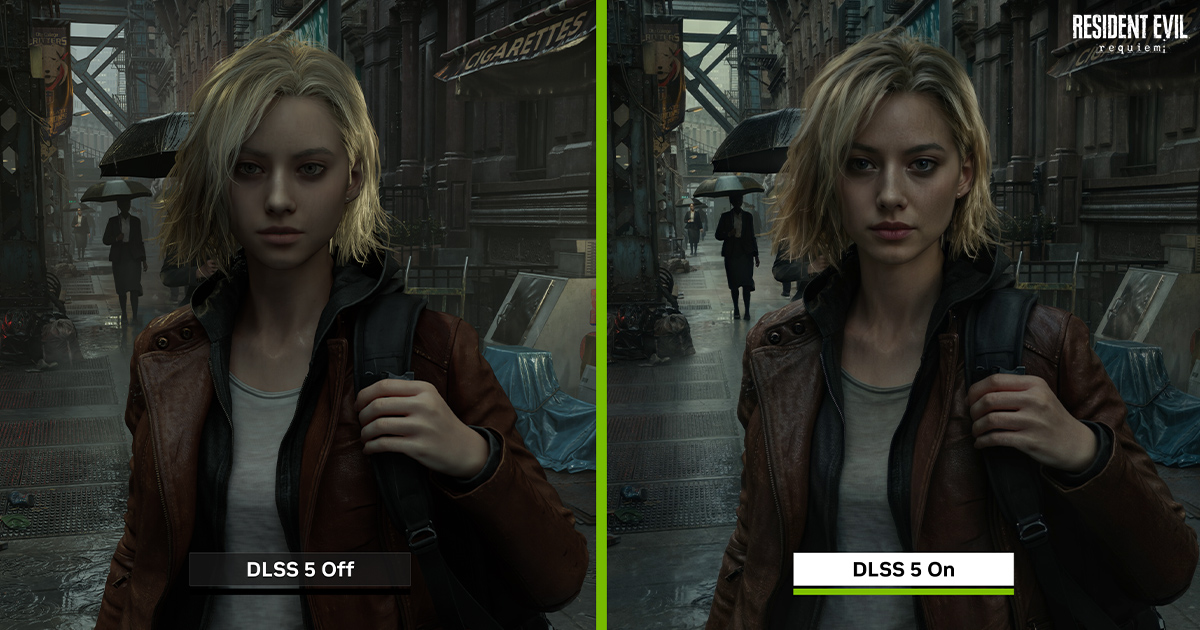
Here's the part I find most fascinating: the main clash wasn't between NVIDIA and the community, but inside the community itself.
On one side, enraged players on social media calling DLSS 5 a "real‑time Instagram filter" and "AI trash that deletes the game's art". The rejection was so intense and organized that it made headlines around the world.
But then comes the question no one wants to say out loud: who exactly does this indignation represent?
Influencer Ronaldinho, at Flow Games, made a point that kept echoing in my head: there's an entire group of players completely outside this debate who, in practice, are the overwhelming majority. They're the people who come home after a long day, turn on the PC or console, and just want to relax with a pretty game.
They are not visual‑art purists. They haven't spent hours studying rendering pipelines. They don't know what the uncanny valley is, and they don't care. They'll open settings, see an option that says "DLSS 5 maximum quality", turn it on without thinking twice and simply enjoy it.
And the most interesting part? They're not wrong. They're playing the way games were meant to be played: for pleasure, for the experience, for escape.
On the other side, players who understand the rendering pipeline a bit better were also frustrated — but with the criticism itself. Veteran artist Georgian Avasilcutei, who has worked at Arkane Studios and DONTNOD, was blunt: "They came to the conclusion that most people talking about this have absolutely no idea what they don't know… they're at the peak of ignorance."
Harsh? Yes. But his technical point is solid: he showed the same character he had worked on, with identical geometry and textures, and the difference between simple rasterization and ray tracing with advanced shaders already makes the face look almost like another person.
And there's the knot: all the "destroying art" discourse is a niche debate — passionate, smart, valid, but still niche. Outside the core‑gamer bubble, DLSS 5 will be received with a simple "wow, this looks cute". And maybe that's exactly what NVIDIA always knew.